Jomashop - Shop Luxury Fashion
- 4.7
- Rating
- 100.00K
- Installs
- Free
- Price

 Analysis by App-foxy
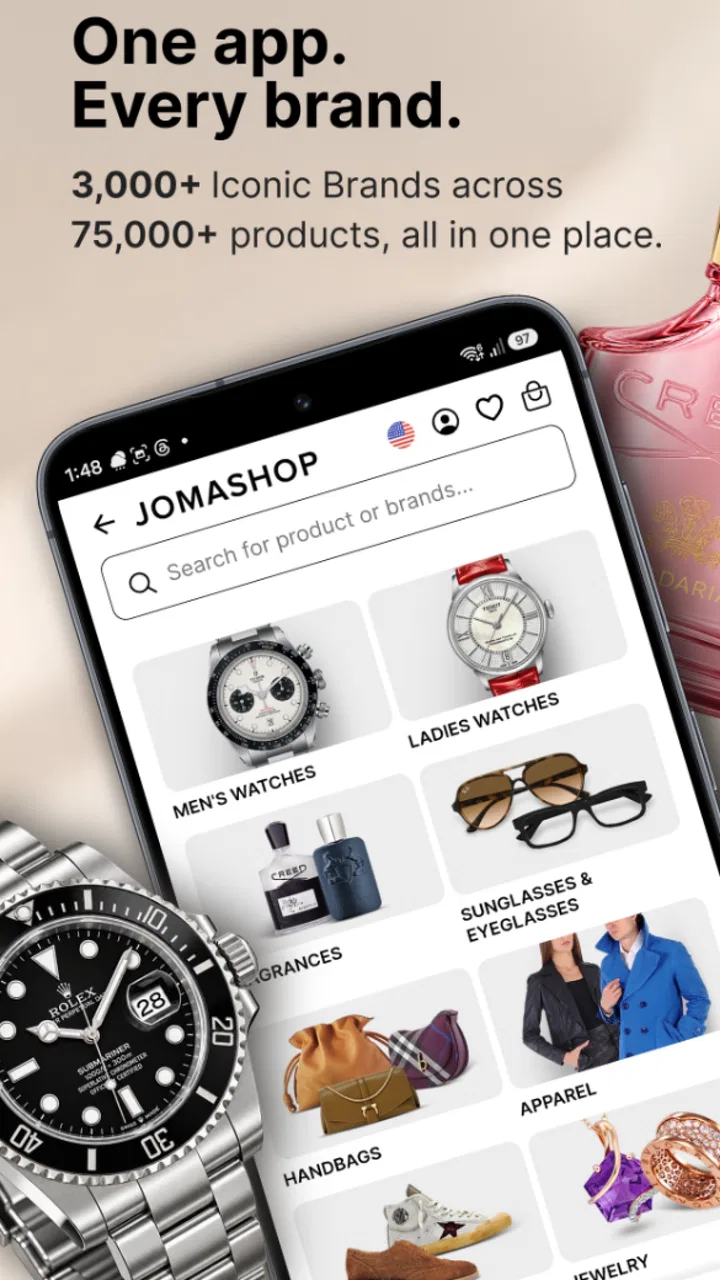
I approached Jomashop - Shop Luxury Fashion as a shopping app for people who want designer watches, fragrances, sunglasses, clothing, and related items in one place. My first impression was that it is most useful when I already have a specific product or brand in mind. It feels less like a casual browsing app and more like a mobile storefront for considered purchases, where product details, variations, delivery expectations, and checkout information deserve careful attention.
The app is free to install, is aimed at Everyone, and comes from Jomashop Inc. It belongs to the shopping category, but its focus gives it a different character from a general marketplace. Instead of opening it mainly to compare household basics or hunt through unrelated sellers, I would use it when looking for a particular style of watch, a fragrance gift, or an accessory that I want to research from my phone.
Its store reputation is encouraging: it holds a 4.7 average from around 2.9 thousand ratings, with more than 400 written reviews and over 100 thousand installs. Those figures suggest that the app has found a real audience, although they should not replace checking the actual item page before buying. In luxury-oriented shopping, the individual product, variant, availability, and delivery terms matter more than a broad app score.
You May Also Like

 AccuWeather: Weather Radar
AccuWeather Review: A Quick, Clear Forecast for Everyday Decisions
For everyday plans, the best forecast is the one you can understand quickly. AccuWeather makes rain timing, radar, and local conditions easy to act on, with a few trade-offs.

 Hill Climb Racing
Why Hill Climb Racing Still Turns Crashes Into One More Run
A tiny car, a bumpy hill and one more upgrade: Hill Climb Racing keeps resurfacing because its simple chaos makes every near-miss feel personal.

 AliExpress - Shopping App
AliExpress Makes Global Shopping Feel Personal, but Shoppers Bear the Risk
AliExpress turns a global marketplace into a pocket-sized discovery engine. Its reach is useful, its shopping loop compelling, and its trade-offs easy to miss.

 Lords Mobile: Kingdom Wars
Lords Mobile Is a Kingdom-Building Routine, Not a Quick Match
A case-by-case verdict on the building, battles, device demands, and social commitments that make Lords Mobile rewarding for some players and exhausting for others.

 PDF Scanner app - TapScanner
TapScanner Makes Paperwork Easier to Capture, Check, and Share
TapScanner makes scanning with a phone feel less like a rescue operation and more like a dependable step in getting work done. Its capture tools are useful, though not flawless.

 Block Blast!
 Shows How Much a Puzzle Game Can Leave Out
A quiet grid game shows why puzzle players increasingly value instant clarity, repeatable skill and low-pressure play—and where the genre still needs to catch up.
More From Our News Desk
View All News


Where the shopping experience can slow you down
The first place I expect users to get stuck is not installation. It is deciding how to narrow a large catalog without turning the session into endless scrolling. Watches alone can vary by brand, case style, strap, color, movement, and intended use. Perfumes and sunglasses create their own comparison problems. If I open the app without a rough idea of what I want, browsing can become less efficient than searching with a clear phrase.
My practical approach is to begin with one decision: am I shopping by product type, brand, occasion, or budget? Even without relying on a complicated plan, that question keeps the session focused. Someone looking for a wedding gift should think about recipient and style first. Someone replacing a daily watch may care more about size, readability, and strap comfort. A user who simply wants to discover deals may need more patience because discovery shopping naturally involves more comparison.
Another likely friction point is the difference between seeing an attractive product card and understanding the exact item. A photograph can make two watch variants look almost identical while their details differ. The same applies to fragrance sizes or sunglasses with different finishes. I would never treat the first image as enough information. I would open the full listing, read the descriptive text, inspect all available choices, and confirm that the selection shown at checkout matches the one I intended.
The most useful habit is to slow down before the final purchase step. Shopping apps are designed to make moving from discovery to checkout easy, but expensive or gift-related purchases deserve a deliberate pause. I check the product name, selected variation, quantity, delivery information, and total shown on screen. This takes less time than correcting an accidental choice later.
Search behavior can also affect the experience. A broad search such as “watch” may produce too many directions, while a very specific phrase may require trying a simpler wording. I would start with the brand or product family if I know it, then refine from the results. If the first search does not help, I would not assume the item is unavailable immediately; I would try a shorter term and browse the relevant product section instead.
Why product research matters more here than in ordinary shopping
Jomashop is aimed at categories where appearance and specifications both influence the decision. A watch is not only a color on a screen; its shape, strap, display, and overall proportions affect whether it will work for the owner. A fragrance is personal, and a gift buyer may need to think about familiarity and occasion rather than choosing solely from a product photo. Sunglasses bring fit and style into the decision.
That makes the app a better fit for a user who enjoys comparing details than for someone who wants the fastest possible one-tap purchase. I like having a focused catalog for these products, but I also accept that the responsibility to verify the choice remains with me. The app can organize the shopping journey; it cannot decide whether a particular size, scent, or style suits the person receiving it.
Setup checks that prevent avoidable trouble
Before judging the app, I would make sure the phone meets its basic requirement. The current version is 92 and requires Android 10 or later. On a compatible device, I would install it through the normal app store process, open it, and allow the first screen enough time to load before repeatedly tapping buttons. Rapidly reopening an app during its first launch can make a temporary loading issue feel more serious than it is.
If the app does not open correctly, I would begin with ordinary checks: confirm that the phone has a stable internet connection, switch between Wi-Fi and mobile data if appropriate, and close other demanding apps. I would also check whether the device has enough free storage for normal app operation. These are simple steps, but shopping pages depend on network communication, product images, account sessions, and checkout screens all working together.
When a page appears incomplete, I would avoid making a purchase until the important information is visible. A missing image may be a temporary connection problem, while a missing product option could be a page-loading issue. Refreshing once, returning to the previous screen, and reopening the listing is more sensible than guessing. If the same problem affects several unrelated pages, I would treat it as a broader connection or app-loading issue rather than a problem with one product.
Account setup should also be approached carefully. I would use the same contact details I expect to use for order communication and check every field before continuing. A typo in an email address or delivery detail can create confusion later, especially when the purchase is a gift. I would save any order reference or confirmation information in a place I can find again, rather than relying only on memory or an open app screen.
One useful setup check is to decide whether I am browsing casually or preparing to buy. For casual research, I can compare items without rushing into account or checkout steps. For a planned purchase, I prefer to sign in or enter details only when I am ready to verify the final selection. This reduces the chance of leaving an unfinished session and later forgetting which variant I had chosen.
How I handle checkout uncertainty
Checkout is where I become especially cautious. I review the item title, selected options, quantity, delivery destination, and final amount as displayed in the app. I also look for any information that could affect timing or suitability, such as whether the item is intended as a gift or whether I need it by a particular occasion. I do not assume that the fastest-looking route is the best one if the product details have not been checked.
If a payment attempt appears to fail, I would first check whether the order actually went through before trying again. Looking for a confirmation screen, order record, or relevant message can help prevent duplicate attempts. Repeating a payment immediately after an unclear response is one of the easiest ways to create unnecessary worry. If the result remains unclear, I would use the app’s available support route and provide the item details and any reference information rather than submitting several identical attempts.
For a high-value purchase, I would also keep a personal note of the exact item I selected. That could include the brand, model or product name, color, size, and the time of purchase. This is not a special feature of the app; it is a practical record that makes later communication much easier if I need to ask about an order.
Recovering a shopping workflow when something goes wrong
When a session breaks, my first step is to identify where it broke. A blank catalog screen, a product page that will not finish loading, a sign-in problem, and an unclear checkout result are different situations. Treating them all as “the app is broken” often leads to random tapping and repeated attempts. I get better results by returning to a stable screen, closing the app once, reopening it, and then repeating only the last necessary action.
If browsing works but one product page does not, I would search for the item again rather than assuming the whole catalog is unavailable. If several areas fail, I would check the connection and try again later. If the app opens but my account session behaves strangely, I would avoid creating a second account immediately. Duplicate accounts can make order history and saved information harder to follow.
Search recovery is another area where a small change helps. I would remove one qualifier from a failed search, use the core brand or product term, and then inspect the resulting category. For example, a long phrase containing color, material, and occasion may be less effective than starting with the brand and product type. Once the broader results appear, I can compare the visible choices directly.
For gift shopping, I use a two-pass workflow. First, I shortlist items based on style and suitability. Second, I return to each candidate and verify the exact variant and delivery information. This is safer than choosing the first attractive result while thinking about the recipient, the price, and the deadline all at once. It also makes the final decision less emotional and more practical.
For personal purchases, I find it helpful to compare no more than a manageable group at a time. Looking at too many similar watches or fragrances can blur the differences that matter. I would note why each finalist remains in consideration, such as a more versatile appearance, a better match for the recipient, or a design that fits everyday use. The app is most effective when I bring a clear comparison method to it.
When restarting helps and when it does not
Closing and reopening the app is reasonable after a temporary loading problem, but it is not a universal solution. It will not fix an incorrect delivery address, a product that is genuinely unavailable, or uncertainty about which variation was selected. Those situations require reading the listing and order information carefully.
Likewise, changing networks can help with images or pages that fail to load, but it cannot resolve a mistaken search or an incomplete form. I try one troubleshooting step at a time so I know what changed. If the app becomes responsive after switching connections, I continue cautiously and recheck the page rather than assuming every previous screen is still current.
Keeping the app updated is sensible because the current release may improve compatibility or correct problems, but an update should not be treated as proof that a purchase issue will disappear. I still verify the product and checkout details after reopening. The goal is not simply to make the screen work; it is to make sure the shopping decision remains accurate.
When the app is not the cause
Some frustrations belong to the wider shopping process rather than the application itself. A product may sell out while I am comparing it. Delivery timing may depend on destination and fulfillment circumstances. A fragrance may look appealing but still be a poor gift if I know nothing about the recipient’s preferences. No app can remove those trade-offs.
This is why I separate technical confidence from purchase confidence. A smooth screen does not mean the item is right for me, and a slow page does not necessarily mean the product is problematic. I judge the app on navigation, clarity, and recovery, while I judge the purchase on the item’s details and suitability.
Jomashop is also not the best choice for every shopping mission. If I need groceries, everyday household supplies, or a broad marketplace with many unrelated sellers, a general retail app may be more efficient. If I need to try on clothing or sunglasses before deciding, a physical store can offer reassurance that a mobile catalog cannot. If I want independent research across many retailers, a comparison service may be better for the first stage, followed by Jomashop when I am ready to inspect its selection.
On the other hand, the focused catalog is valuable when I already know the kind of item I want. Instead of filtering through a general marketplace filled with unrelated results, I can stay within watches, perfumes, sunglasses, apparel, and similar fashion-oriented products. That focus is the app’s strongest practical reason to exist on my phone.
For authenticity concerns, I would read the product information carefully and keep the order details. The store positions itself around authentic designer brand-name goods, but as a buyer I still want the exact listing, variant, and confirmation information associated with my purchase. Careful documentation is useful for any significant online order and is especially sensible when buying a branded item as a gift.
Who will appreciate it most
I would recommend the app to someone who likes researching watches, fragrances, sunglasses, and designer fashion from a phone. It suits a shopper who is comfortable comparing product pages, checking selections before checkout, and making a considered choice rather than buying impulsively. It can also be useful for gift planning because the catalog gives several fashion-related directions in one shopping environment.
I would be more hesitant to recommend it to someone who dislikes reading item details or who needs immediate certainty about fit, scent, or appearance. That user may be happier in a store where they can handle the product, try it on, or ask questions face to face. I would also point a very casual browser toward a broader retailer if their interests extend far beyond luxury fashion categories.
The app’s age rating of Everyone makes it broadly accessible as a shopping application, but that does not change the need for adult judgment around purchases, delivery details, and payment decisions. The rating describes suitability of the app’s content, not whether every product is appropriate for every shopper or occasion.
My practical verdict after using it as a focused fashion store
I see Jomashop as a useful specialist shopping app rather than a universal retail replacement. Its value comes from concentrating designer-oriented products in a mobile storefront and making it convenient to research them away from a desktop. The free price removes a barrier to trying it, and the strong 4.7 average from around 2.9 thousand ratings gives it a reassuring starting point.
My recommendation comes with a clear condition: use it deliberately. Start with a defined product goal, search in manageable terms, open the complete listing, and verify the exact choice before checkout. If a page fails, troubleshoot the connection and session calmly instead of repeating payment or creating extra accounts. Those habits address the most realistic sources of frustration without pretending that every problem is a technical bug.
I would choose it for a watch comparison session, a fragrance gift search, or a focused look at designer accessories. I would skip it when I need a physical fitting, a scent test, a very broad everyday marketplace, or the absolute quickest purchase with no research. For the right shopper, its focused catalog is more useful than a generic store when the decision is about style and brand.
Overall, I would keep the app available for planned fashion purchases. It does not remove the need to think, compare, and verify, but that is appropriate for the products it presents. If you approach it as a research-and-purchase tool rather than an impulse-buy shortcut, it offers a practical way to explore Jomashop Inc.’s selection on a compatible phone running Android 10 or later.
FAQs for Jomashop - Shop Luxury Fashion
01What is Jomashop - Shop Luxury Fashion?
Jomashop is an online shopping app focused on luxury and designer products, including watches, handbags, jewelry, fragrances, clothing, and accessories. From the app, you can browse brand collections, compare product details, check current prices, and place orders from a mobile device. It is designed for shoppers looking for discounted luxury merchandise rather than a traditional full-price department-store experience.
02Are the products sold through Jomashop authentic?
Jomashop states that the merchandise it sells is authentic and sourced through its retail and distribution network. However, many items may not include the original manufacturer’s warranty because they can come from the gray market. Before purchasing an expensive watch, handbag, or accessory, carefully review the listing, included documentation, warranty information, and seller policies so you understand exactly what is provided.
03Why are Jomashop prices often lower than regular retail prices?
Jomashop frequently offers prices below those found at authorized retailers because it operates largely through independent distribution channels and may sell gray-market merchandise. Lower pricing can be attractive, especially for luxury watches, fragrances, and designer accessories, but buyers should compare the complete offer rather than price alone. Check shipping costs, warranty coverage, return conditions, availability, and estimated delivery time before completing checkout.
04Can I return an item purchased through the Jomashop app?
Return eligibility depends on the product category, condition, and the specific policy displayed for your order. In general, items usually need to be returned within the stated period, unused and with original packaging, tags, accessories, and documentation. Some products, such as fragrances, personalized items, or certain intimate goods, may have additional restrictions. Always read the current return policy before ordering and keep your confirmation details.
05Is the Jomashop app safe to download and use for purchases?
The official Jomashop app can provide a convenient way to browse products, manage an account, and place orders, but users should download it only from the verified Google Play Store or Apple App Store listing. Use a strong, unique password and review payment details before submitting an order. For high-value purchases, save invoices, tracking information, warranty terms, and customer-service correspondence in case assistance is needed.
Pros
- Wide selection of designer watches
- handbags
- jewelry
- and accessories.
- Frequent discounts make luxury brands more affordable than retail prices.
- Product listings include useful details
- photos
- and condition information.
- Secure checkout supports convenient payment and order tracking options.
- The app makes browsing sales and saving favorite items straightforward.
Cons
- Some popular items may sell out quickly due to limited inventory.
- Return policies and exclusions can vary by product category.
- Shipping times may be longer for certain items or destinations.
- Luxury purchases may not include the brand’s original store warranty.
- The large catalog can make finding specific products time-consuming.

Jomashop - Shop Luxury Fashion
Gallery